
Why build with EPIC mix?
EPIC stands for Expanded polystyrene Paper Infused Cement. It's an experimental building material that was developed by Dave Pennington to build low cost aquaculture pens, and is being popularized by "Aircrete" Harry.
Check out "Aircrete" Harry's Youtube channel for a number of videos on how to build with the material:
- Sledgehammer test
- Burn test
The

▶ Watch on YouTube
also has a number of useful videos with a similar material (styrocrete).
EPIC mix has a number of nice properties for the DIY builder, including:
Inexpensive (EPS foam, and scrap paper are available for free, and cement is cheap)
Fire resistant
Light weight (floats on water)
Insulative
Easily worked (you can pour it like concrete, or apply it like cob). Once cured, you can screw inton it with wood screws or cut and shape it with commonly available woodworking tools
Strong (resists repeated sledgehammer blows)
Relatively non-toxic.
The recipe consists of shredded EPS foam beads, paper pulp, and cement in various proportions to achieve different strengths / insulation / weight. More EPS foam increases insulation value, and decreases weight, but also decreases strength.
Tools:
safety glasses
9 mil nitrile gloves
face mask
double paddled mortar mixer
55 gallon drum livestock tank
5 gallon bucket
trowel
sponge
cement mixing tub
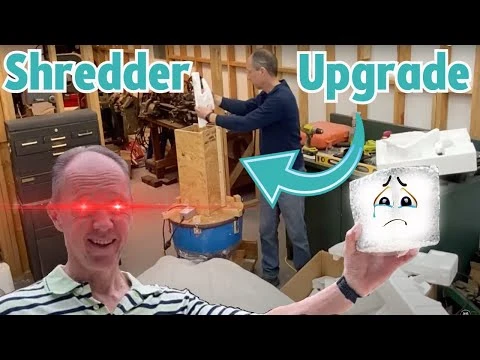 ▶ Watch on YouTube
Materials:
paper pulp
EPS foam beads cement
either Ordinary Portland Cement (OPC) or Calcium Sulfo-Aluminate (CSA) cement
water
set retarder (optional)
superplasticizer (optional)
reinforcement, such as stucco mesh, chicken wire, basalt mesh, expanded metal lath (optional)
formwork
mold(s)
Procedure:
Fill the feed stock tank half full of water. Begin adding the paper mulch to the tank, mixing as you go, with the mortar mixer. Add enough paper to form an oatmeal-like slurry.
Add two 5 gallon buckets of the paper slurry to a 55 gallon drum. Slowly add a 55 lb bag of Ordinary Portland Cement to the paper slurry, mixing as you add it.
Mix for about 1-2 minutes, until the paper fibers are thoroughly coated with the cement paste.
Add shredded EPS beads, mixing as you go. Mix it slowly at first, then increase speed.
The more EPS beads you add, the lighter, and more insulating the mix will be. The less EPS you add, the stronger and heavier the mix will be. Here are the ratios to achieve different strengths:
.
- Balsa - 5+ buckets (of EPS foam)
- Pine - 4 buckets
- Yellow Pine - 3 buckets
- Oak - 2 buckets
- Balsa - 5+ buckets (of EPS foam)
Pour the mix into your form. Press any reinforcement (such as basalt mesh, expanded metal lathe, etc) into the wet mix, and use the trowel to push it down and smooth over it.
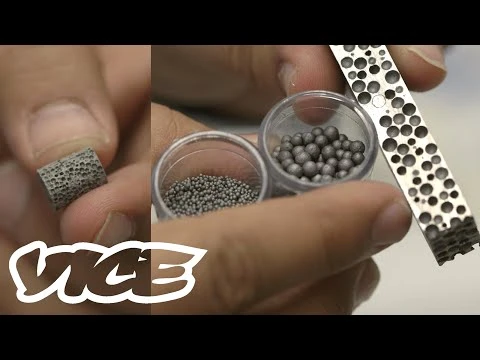
If you don't want to use EPS, you can substitute closed cell perlite or closed cell glass cenospheres on a roughly 1.2:1 basis for the foam. Perlite is a natural material. It's a lightweight volcanic rock that is formed when lava foam cools. The perlite is denser than EPS foam, so you need to add more to achieve the same level of insulation. Cenospheres are tiny, hollow glass beads. They have been used to make syntactic foam, which can withstand
 ▶ Watch on YouTube
(16,500 psi / 114 MPa ). Syntactic foam was used to insulate the James Cameron's Deepsea Challenger, which was used to dive to the bottom of the Marianas Trench.
If you want a stronger, faster setting mix you can use Rapid Set Cement All Non-Shrinking Grout instead of Ordinary Portland Cement (OPC). Rapid Set Cement is a Calcium Sulfoaluminate (CSA) cement, which relies on a different chemistry from Ordinary Portland Cement.
CSA cement has a number of advantages relative to OPC:
Stronger. When fully cured, CSA cement reaches a compressive strength of 9000 psi vs the 3500-4500 psi achieved with OPC.
CSA cement also sets up rapidly. It reaches high strength (4000 psi) in 3 days vs the 28 days for OPC.
CSA cements are about 30 times less alkaline than OPC, so it is less corrosive to reinforcements like fiberglass.
CSA Downsides:
CSA cement is more costly, about 3X the cost of OPC.
CSA requires a higher water to cement ratio than OPC, The minimum recommended water to cement ratio (w/c) is 0.35 for CSA, whereas with OPC is around 0.22-0.25.
CSA sets up very rapidly. At summer temperatures (above 80-85°F), non-retarded CSA concrete made with a w/c ratio of 0.35 can set in as little as 5 minutes. You can add packets of set retarder, which will give you another 10 - 20 minutes of working time.
Admixtures
Note: most pozzolan admixtures (metakaolin, fly ash, VCAS, etc) will not work the same way with CSA's as they do in OPC. In most cases, they will make the mixture worse, so should not be added. However, fibers, mineral pigments, acrylic bonding agents, and superplasticizers should work the same in both kinds of cement.
Alkali Resistant Glass Fiber - Glass fiber with added zirconium oxide to help resist attack from alkalinity. Used to replace steel re-inforcement, making material lighter and thinner.
Acrylic polymer - Useful for binding new concrete to old concrete, optimizes cement hydration throughout the curing process, increasing density, flexural strength, color fastness, and overall durability of the finished concrete.
Acryl-60 - acrylic concrete bonding agent. Used for making the Valero 60 line of ferrocement boats.
RHOPLEX™ E-330 Emulsion Polymer - acrylic concrete bonding agent. Comes in 47% solids drums, and is diluted to 25% solids before use. Similar to Acryl-60.
Buddy Rhodes Powdered Polymer 1210 - 100% solids powder
Anti-Hydro AH-1 - Raises the amount of cement that actually chemically reacts with water from ~70% to ~95%. This yields denser, harder material which is impermeable to water and very low in water vapor transmission. It also increases the speed with which the concrete will harden.
Fly Ash - A waste product from burning coal, fly ash can be substituted for OPC up to 50%. Fly ash makes the mix sticky, and, once cured, much harder / denser. However, adding it to mix may increase curing time. For marine applications, Class F fly ash is preferred and should have 50 percent silica. Fly ash also reduces bubbles aka "bug holes" and makes finishes smoother.
Metakaolin - Calcined amorphous alumina silicate derived from the clay mineral kaolinite. Used for centuries in the production of porcelain. Added to OPC, metakaolins increase corrosion resistance and sulfate resistance, decrease permeability and absorption, and reduce alkali-silica reactivity.
Mineral oxide pigments - Odorless, alkali & weather resistant, UV stable, non- hazardous, chemically inert, water soluble. Between .25% up to a maximum of 10% of your cement weight is recommended.
PVA Fibers - PVA (Polyvinyl alcohol) fibers are monofilament fibers that disperse throughout the concrete matrix. They provide shrinkage control, abrasion resistance, and protection from thermal expansion and contraction. Since PVA fibers are monofilament fibers, as opposed to a bundle fiber like AR Glass Fiber, the fibers disperse throughout the concrete matrix with minimal visibility in the finished object. Dosage can range from 0.1% to 2%.
Silica Fume - Silica fume consists primarily of amorphous (non-crystalline) silicon dioxide (SiO2). Its individual particles are extremely small, approximately 1/100th the size of an average cement particle. It therefore effectively fills in empty pores in the cement and helps produce a stronger, more compact material. It also provides significant improvements in the permeability, abrasion resistance, and chemical resistance of concrete. It reacts with the cement paste to form additional strong Calcium Silicate Hydrate (CSH).
Superplasticizers (also called water reducers) - Superplasticizers transform stiff, low-slump concrete into flowing, pourable, easily placed concrete. They can improve workability, speed finishing, increase strength, conserve cement and help reduce shrinkage and thermal cracking.
Melment F10 - Mix pre-mixed concrete or cement with plasticizer for a few minutes, then add water (mix at least 3-5 minutes). You can also add Super plasticizer to the water 10-15 minutes prior to casting (until plasticizer dissolves in water), then mix with dry ingredients. Please note: Concrete minimum mixing time is 3 minutes with mechanical drill or 5 minutes with mortar mixer (it takes a few minutes until Super Plasticizer absorbs into the cement and start reaction). Plasticizer recommended dosage 0.20-2% by Cement weight. We recommend to start with 2% by cement weight, then lower the dosage as needed.
Buddy Rhodes 205
Note: most other admixtures (metakaolin, fly ash, VCAS, etc) will not work the same way with CSA's as they do in OPC. In most cases, they will make the mixture worse, so should not be added.powdered polycarboxylate plasticizer - Water Reducer 205 is a powdered polycarboxylate based plasticizer and pozzolan blend. It is a dry, white, multi-component material that can also replace pozzolan in certain mix designs. Ideal for use in GFRC face and backer coats, or as a water reducer in any concrete formulation. This unique blend offers both water reducing capability as well as pozzolanic benefits, improving the workability, strength and durability of concrete.Dosage Rate: 0.5 - 10% of Cement Weight
Water Reducer 205 has a wide range of dosage rates, depending on the application and mix. In GFRC face coats, use the lower end of the dosage range, typically 2-6 grams per 1 lb. (0.45 kg) of cement used. In wetcast mixes, dosage ranges can approach 10% of the cement weight. The ultimate indicator of an overdosage of plasticizer is segregation of the mix. Make test batches prior to production to ensure optimum dosage.
Water Reducer 205 is 10% as potent as Water Reducer 310.
VCAS - Vitrified Calcium Alumino-Silicate. Can replace up to 20% of the dry cement weight in a mix.
Paper sources
paper attic insulation (available at Lowes / Home Depot)
scrap paper
cardboard delivery boxes
EPS foam sources
Rent-A-Center
Tractor Supply
Appliance centers
Perlite suppliers
Additional Information
How to mix EPIC concrete
Full EPIC mix training video ($45): https://vimeo.com/ondemand/howtomixepiccement
Want to stay in touch? You can reach me in a variety of ways from my Contact page.