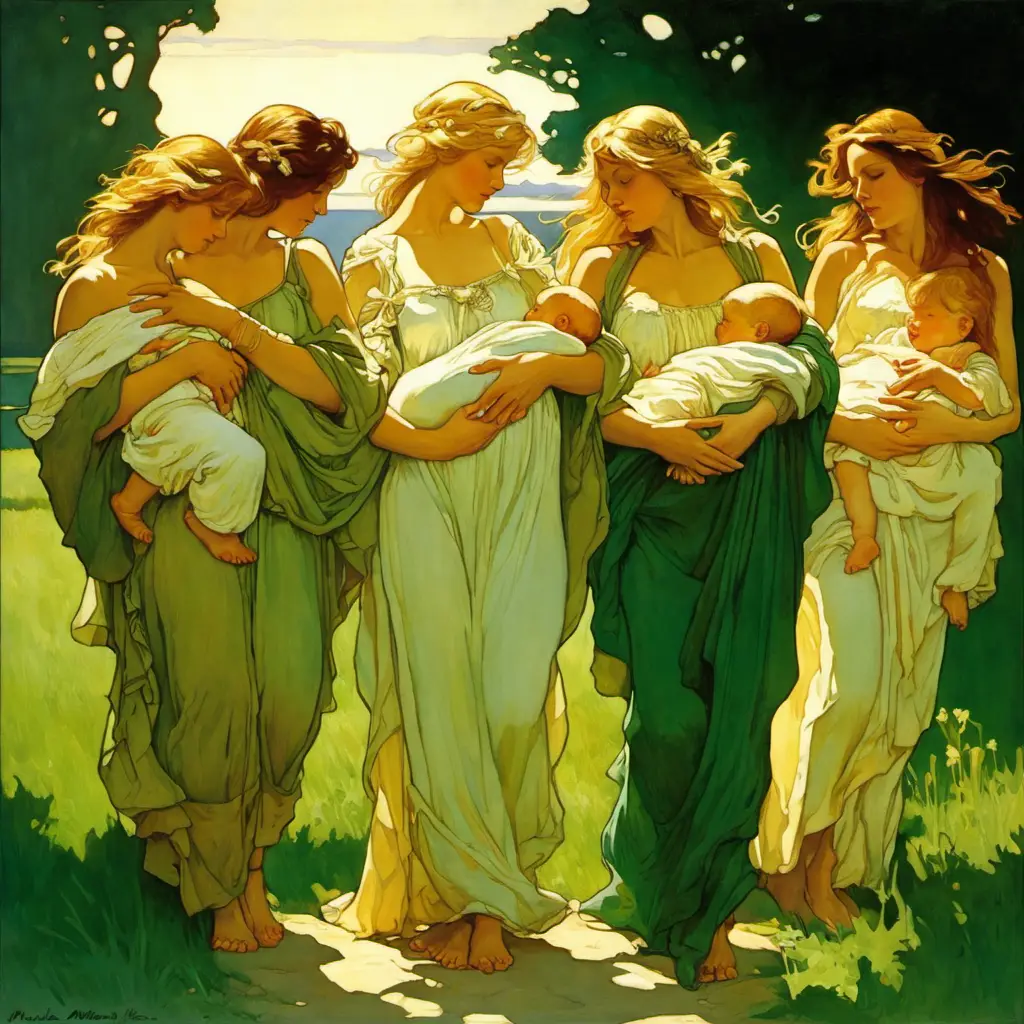
Across much of the world, the fertility rate—the average number of births per woman— is collapsing.
For example, South Korea’s fertility rate has fallen to 0.72, the lowest in the world. As a result, South Korea’s population is expected halve from 51 million today to 25 million by 2100. The elderly (65 or older)—as a percentage of the population—are expected to increase to 46.5% by 2067.
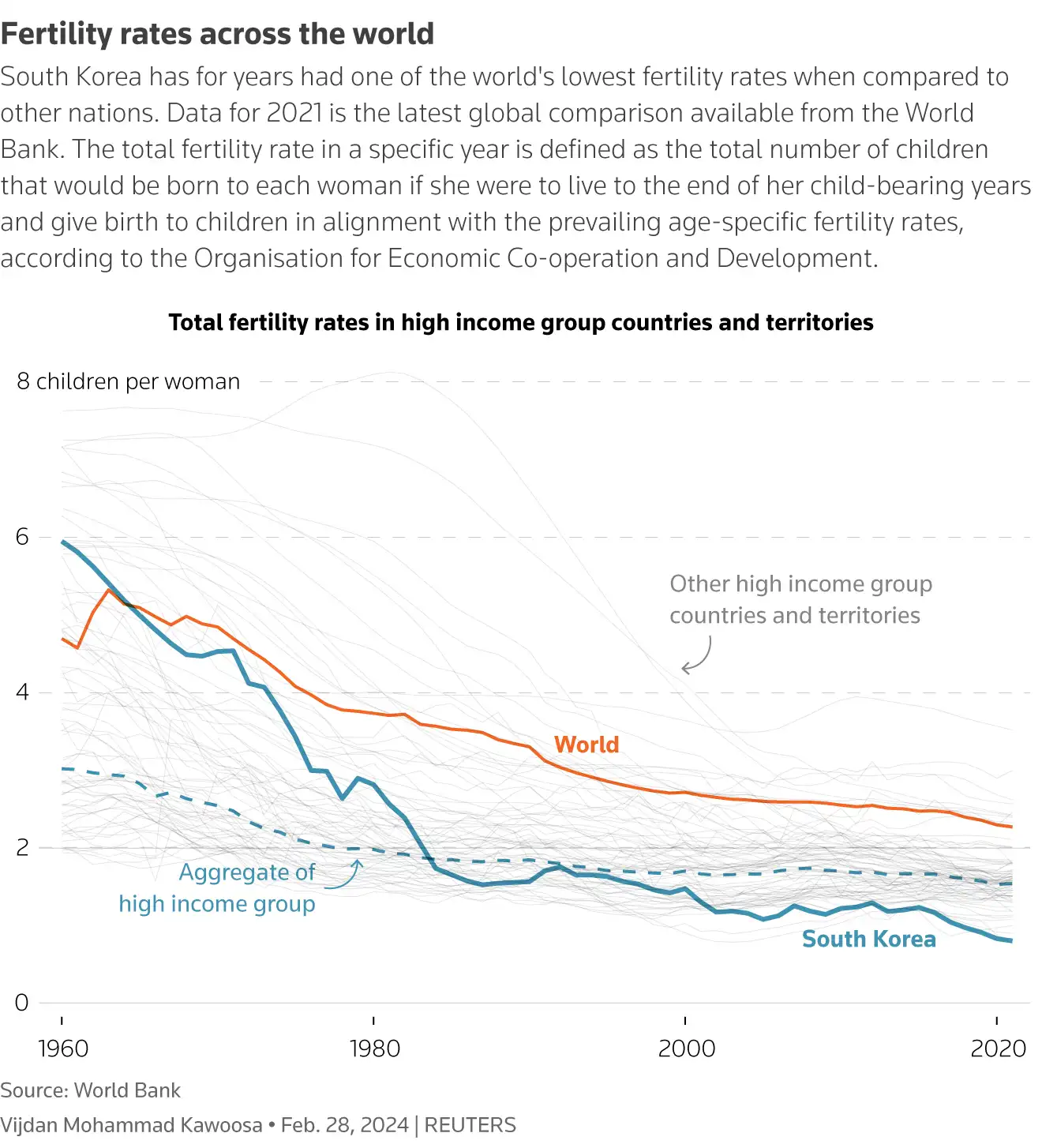
South Korea is not alone. All countries—save for Israel and a few developing countries in Africa— have declining fertility rates.
In 1990, the average number of births per woman was 3.2, but by 2019, it had fallen to 2.5, and is projected to decline further to 2.2 by 2050. A fertility rate of 2.1 births per woman is necessary to maintain a stable population over the long run, in the absence of immigration.
“So what?” you might ask. “Maybe a declining birth rate is a good thing.”
How you regard declining birth rates depends on your ideology.
If you’re an environmentalist who views humanity as a scourge upon the earth, you might welcome fertility decline. Fewer humans will mean lower pressures placed on the environment. Fewer cars means less oil turned to smoke. Fewer humans to feed mean less fish scooped from the ocean. Less housing demand will mean fewer forests cleared for wood.
On the other hand, the fertility decline will cause shortages of all workers. Stock market returns will decline as fewer customers buy company products. Even as an increasingly elderly population demands more medical care, fewer doctors and nurses will enter the field. This will cause shortages and increased prices for medical care.
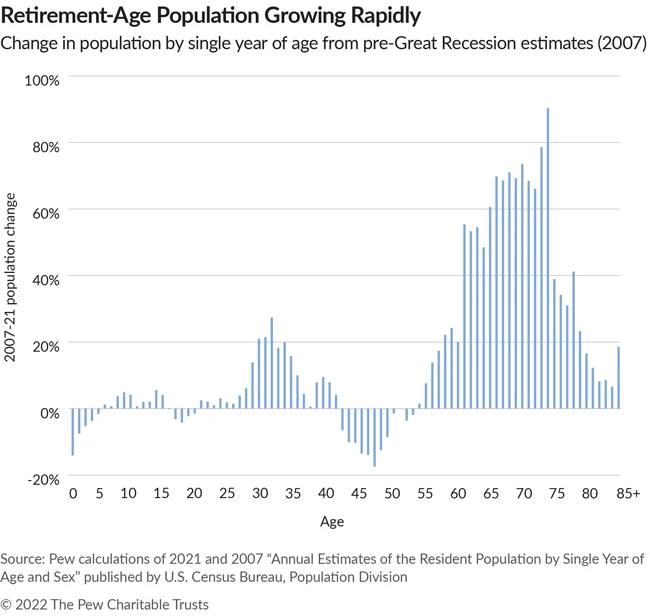
Most countries also have “pay as you go” social security system. If the working population is not replenished, there will not be enough workers paying into the system to make the payments that were promised to the elderly.
Let’s assume for the sake of argument that you want to reverse the fertility decline. How might you go about doing it?
There are many possible contributors to the decline of fertility rates. However, the most plausible to me are the following:
Children aren’t worth as much as they once were.
The opportunity costs of having children are too high (career, travel, dining, etc)
Childcare costs are too expensive.
For a subsistence farmer, a new child can bring substantial benefits. They can help tend to the animals, plow the fields, cook, gather firewood, tote water, etc. They can also provide for elderly parents when they can no longer work.
In wealthier developed countries, children typically aren’t allowed to work and contribute to household wealth. Most modern countries force children out of the labor market, and into lengthy schooling systems.
Many parents feel obligated to provide expensive services for their child: music lessons, sports gear, international travel, college education, a car, etc. As a result, children are seen as a net drain on household finances.
Increasing wealth increases the opportunity costs for parents. Poor subsistence farmers can’t afford travel, theater shows, sports tickets, expensive cars, or any of the many pleasures of modern life. The wives of subsistence farmers aren’t giving up rewarding careers in medicine, law, or engineering to have children.
Modern women in developed countries value their careers, and many would be unhappy to return to raising children instead of working. And many couples don’t want to sacrifice the many pleasures of modern life for children.
With industrialization, the majority of the population have moved to cities. Cities offer many advantages, such as job opportunities, less expensive food, and access to a wide variety of goods and services. However, one of the downsides of city life is a much higher cost of housing. More expensive housing means higher cost to having kids.
In response, pronatalists have proposed many ways to incentivize people to have more children:
State subsidized
fertility treatments
childcare
maternity care
food, clothing, infant care
Mandatory paid family leave
Income tax exemptions
Housing subsidies
Pronatalist propaganda campaigns
Playground construction
Work From Home initiatives
Home schooling initiatives
However, most of those interventions have met with limited success.
Instead of trying to row against the tide of human nature, I propose that pronatalists look for ways to create more children without asking people to give up their careers or modern pleasures.
IMO, the most promising route forward is to focus on creating organizations (religions, NGO's, and for profit companies) that specialize in child production.
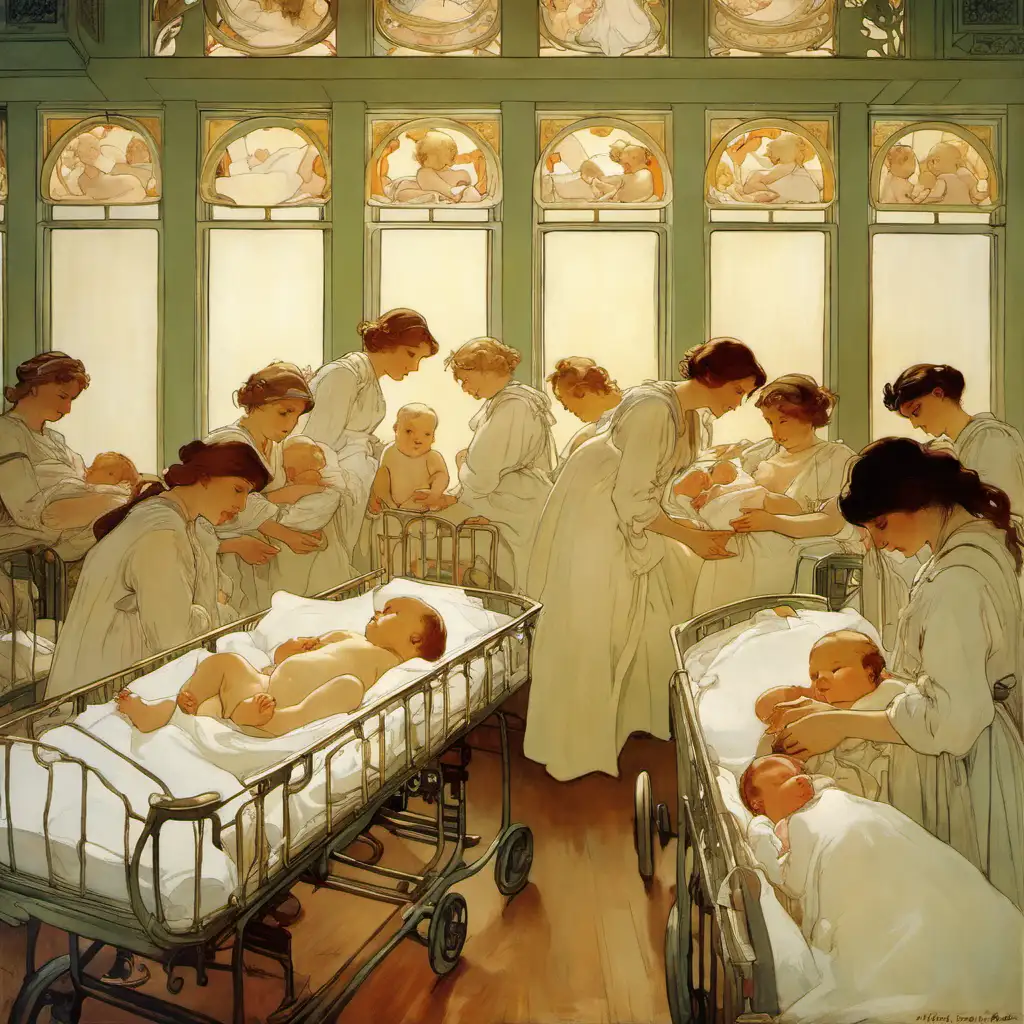
For example, imagine Baby Mama, International (BMI), a 501c3 non-profit corporation devoted to producing and raising children.
As envisioned, BMI would raise capital from pronatalists, religions, NGO’s, governments, and any other individuals or institutions who want to increase the number of children in the world.
BMI would then use the capital to seed the creation of a self-sustaining child production cycle, as follows:
Buy land in a country that has
a reasonably safe, stable government
inexpensive land
inexpensive labor
openness to novel family structures and fertility treatments.
Build a family facility that combines the following:
fertility clinic
maternity hospital
daycare
elementary school
community center
retirement home
Kampung Admirality in Singapore, for example, combines community spaces, housing for the elderly, medical facilities, retail, restaurants, and cafes all shared within a single ventilated structure. A total of 104 studio apartments are provided in two 11-story blocks for elderly singles or couples. As a result, children and the elderly intermingle throughout their daily lives.
Buy eggs/sperm from fertility clinics around the globe and create embryos via IVF.
Hire surrogates to bear the children.
Recruit retired, yet healthy, individuals (65+) to live at on the BMI grounds and care for the children from ages 0 - 12.
In exchange for providing childcare, pay the elderly caretakers a salary into a trust, which they can use later to pay for their own future eldercare.

Train the kids to:
help care for the elderly who are too incapacitated to care for themselves
raise younger kids
care for the community grounds
prepare for their adult lives
At age 6, assign to every child
seven older children (12 year olds) to be their Council of Siblings
seven adults (three 24 year olds, and four 36 year olds) to be their Council of Elders.
The goal of each Council is to a) safeguard the wellbeing of the child while under the care of BMI b) provide mentorship, mutual aid, and emotional support throughout the child's life.
At 18, offer the kids a loan ($120 K, let's say) which they can use to either a) start a business b) go to school.
In exchange for the loan, require the kids to assign 10% of their lifetime earnings to BMI, and agree to mentor future children as a Sibling or Godparent.
Use the loan payments to
repay investors
invest in capital goods (school buildings, libraries, shops, vehicles, etc)
compensate teachers/caregivers
fund infrastructure maintenance
fund scientific research
fund expansion
create a VC fund for the BMI family
The research program might include:
identification of positive genetic traits (IQ, height, strength, equanimity, beauty, grit, liberty proclivity,etc)
polygenic risk screening
germline genetic engineering
in vitro gametogenesis
artificial wombs
cloning
childhood education techniques
robo-nannies
robo-nurses
gamete/embryo cryopreservation
life optimization
uploading
The more successful the research program, the better the quality of care, and the higher quality children that will be produced.

Over time, BMI should foster an increasingly virtuous loop.
Maladaptive traits (laziness, stupidity, psychopathy, and schizophrenia) will edited out, and positive traits will be edited in. Invention of artificial wombs and robonannies will reduce the cost, and increase the quality of care.
If the kids come from good genetic stock, and are raised in a happy, healthy environment, they should become successful, productive members of society. The more successful they become, they more money they will return to the community funds. The more money that comes in, the more children that BMI can raise.
Thus a mechanism for producing happy, healthy, productive children will be developed that will is self-sustaining and doesn’t require fighting against human nature.
Want to stay in touch? You can reach me in a variety of ways from my Contact page.