The future citizens of Pennsylvania might not ever have to pay taxes again, were it not for a theft by the Unitarian Universalist Church.
Born in Sherburne, NY on September 16, 1881, lawyer Jonathan Holdeen (née Holden) was a futurist. (Among other things, he contributed to a collection of essays titled “The Futurite Cult: the future life, life for many or for few nationalized thrift war and the schools and other papers.) (Harlem Valley Times, 1967) (Mylavaganam, 2003)
Holdeen was also savvy real estate investor, accumulating several million dollars over his life.
At some point, Holden learned of Benjamin Franklin’s 200 year trusts, created to 1) provide for the training of young tradesmen and 2) pay for public works for the cities of Boston and Philadelphia.
Perhaps, Holdeen mused, a time might come when…
…some citizen of the present day felt disposed to carry the ‘Franklin Plan’ still further.”” (Holden, Holden, Naylor, 1931) (Collins, 2011)
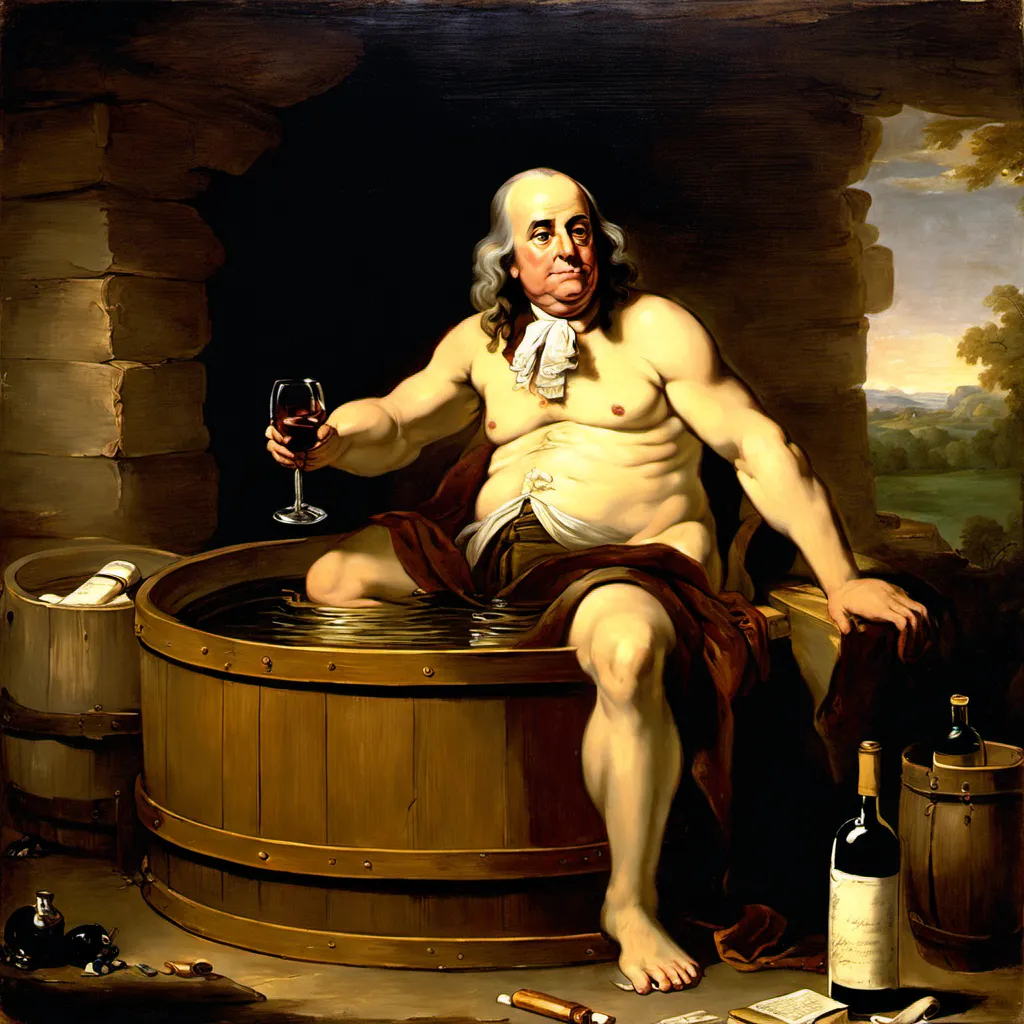
In 1964, Holdeen modified his will to leave several large trusts (totally $2.8 million) under the control of the "Holden Foundation." The Holden Foundation’s mission was ambitious: to end all taxation for the future citizens of the state of Philadelphia.
As Holdeen wrote, he intended the Foundation to bring…
"…to attention of the various governments of the world, the advisability of the adoption of [funds which compound their income] until the amount of such funds shall be large enough so that the income thereof will pay all governmental expenses, general and local, to the end that taxation may be discontinued…“(Estate of Holdeen v. Commissioner, 02-19-1975)
Holden noted that
“…If a compound interest table is consulted, it will be observed that one dollar, kept invested at four per cent for a century becomes 50 dollars and in 235 years becomes 10000 dollars. A short computation will demonstrate that if a single cent could be kept invested at four per cent interest for 1000 years it would become a thousand trillion dollars. The market value of all the real and personal property in the world is less than one trillion dollars.” (Estate of Holdeen v. Commissioner, 02-19-1975)
“His plan was to let the trusts grow, and to keep plowing the investment income back into them, for 500 to 1,000 years. Since charitable trusts are tax-exempt, the pool of money would become immense.
By Holdeen's calculations, the trusts would contain quadrillions or quintillions of dollars after a few centuries - more than enough to pay all the expenses of Pennsylvania government. " (Ditzen, 1996)
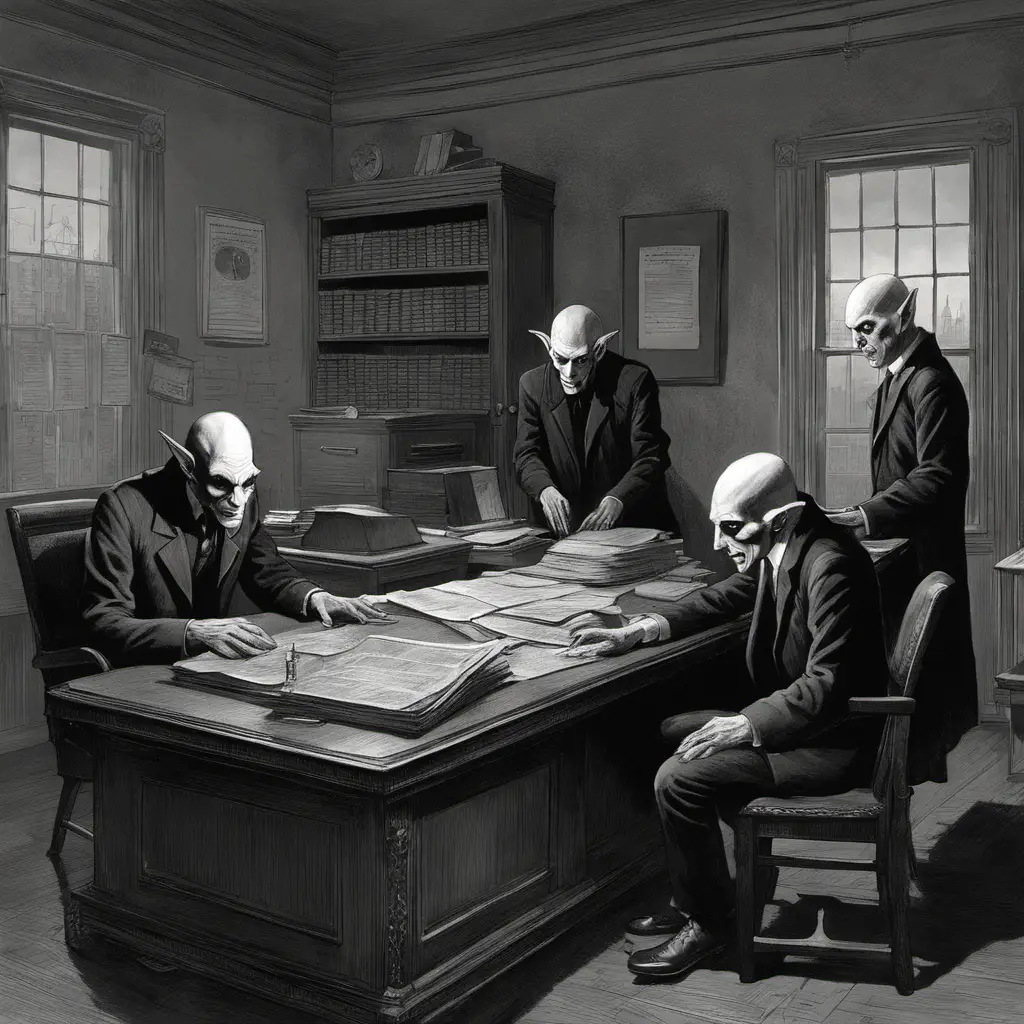
Unfortunately, upon his death, the trusts immediately came under attack, beginning with a 30 year legal battle waged by the IRS…
“…to prove that the trusts were part of an elaborate scheme by Holdeen to avoid taxes and benefit his family. But the U.S. Tax Court rejected that theory and upheld the trusts as valid in 1975.” (Orlando Sentinel, 1994).
The Unitarian Universalist church waged a more successful line of attack.
“Given the experimental nature of the trusts, Holdeen thought it wise to name an well-respected existing charity to be the beneficiary. He”picked the Unitarian Universalist Church, known for its open-minded and liberal theology, as a beneficiary.
The church, with 1,037 congregations and 204,000 members, was to receive a tiny part of the income from the trusts each year. By that device, Holdeen thought, he could make the long-range plan conform with requirements of law.” (Orlando Sentinel, 1994)
“While Holdeen was alive, church officials consented to the arrangement. After his death, the church filed suit in Orphans Court seeking all the income. Its lawyers contended that piling up money for 500 or 1,000 years was unreasonable and potentially dangerous.
Eventually, the church argued, the Holdeen trusts would soak up all the world's money, and Jonathan Holdeen's descendants, who were to remain in charge of the trusts, would have unimaginable power.” (Ditzen, 1996)

In 1977, Pawelec ruled in favor of the church, concluding that Holdeen's scheme was
"…so visionary, unreasonable and socially and economically unsound that we must conclude the entire plan is charitably purposeless, contrary to public policy and hence void.” (Mylavaganam, 2003)
Two years later the Pennsylvania Supreme Court upheld the Judge's opinion and the Holdeen trusts were broken.
As of 1994, the UAA church had received a total of $21.9 million, and investment income was flowing in at a rate of $1 million a year.” (Orlando Sentinel, 1994).
Some have defended the UUA taking the money because they put it to good use. For example, the UU press Beacon Press published the Pentagon Papers at a financial loss—the Holdeen money would help restore the UUA’s coffers. UUA also used the money “to benefit Asian Indians,” but also to “support the work of the International Association for Religious Freedom, the International Council of Unitarian and Universalists, the Liberal Religious Charitable Society, the World Conference on Religion and Peace, and the Partner Church Council.” (Seaburg, 2018)
“[The UUA] needed the money at the time, it didn’t need it in the future — if it had waited until the future to receive the money Holdeen left for it, then there might not have still been a church to receive it.” (Anonymous commentator)
To my mind, it doesn’t matter the UUA church did something good with the money. I could also do a lot of good if I stole someone else's money. While I’m sympathetic to the financial straits they found themselves in, the UAA should've have kept their word.

The UUA’s behavior illustrates the difficulty of creating long lasting endowments that follow the donor’s intent. Even institutions whose primary mission is to foster ethical behavior easily succumb to greed if the original donor no longer exists to defend themselves.
[Note: In order to distinguish his far future descendants from other families with the common “Holden” surname, he changed his last name to “Holdeen”.]
(Ditzen, 1996) https://web.archive.org/web/20111013060913/https://www.stephankinsella.com/wp-content/uploads/otherdocs/holdeen_trusts.pdf
(Estate of Holdeen v. Commissioner, 02-19-1975)
https://casetext.com/case/estate-of-holdeen-v-commissioner
(Harlem Valley Times, 1967)
https://nyscu.org/Archives/Universalist%20Memory%20Garden/Universalist%20Memory%20Garden%20HM-HZ/Holdeen,%20Jonathan%201967.pdf
(Holden, Holden, Naylor, 1931)
Stephen Holden, Jonathan Holden and Audrey Holden Naylor, The Futurite Cult: the future life, life for many or for few nationalized thrift war and the schools and other papers. 2nd. ed. (Cooperstown: Otsego, 1931)
**
(Mylavaganam, 2003)
http://web.archive.org/web/20031018134828/http://www.svabhinava.org/friends/RajanMylvaganam/Holdeen/
** (Orlando Sentinel, 1994)
https://www.orlandosentinel.com/1994/02/27/lawyers-dream-of-abolishing-taxes-has-become-a-legal-nightmare/
(Seaburg, 2018)
https://web.archive.org/web/20180901001603/http://www.uudb.org/articles/robertnelsonwest.html
(Trusts of Holden, 1979) 486 Pa. 1 (1979), 403 A.2d 978
https://www.leagle.com/decision/1979487486pa11487
Want to stay in touch? You can reach me in a variety of ways from my Contact page.