Many ocean going vessels are made out of steel, as steel can withstand the tremendous forces that water can put on marine structures.
However, steel rusts. So life aboard a ship is a constant battle to protect the steel from rust, and to remove rust when it forms.
I’ve compiled a list of procedures / products to help prevent / remove rust below.
How to prevent rust from starting in the first place.
Many of these tips come from the Workshop Companion
Wash salt spray off of vehicles / engines every week with Simple Green.
Spray all plastics/rubber on tools etc with food grade silicone spray. Otherwise the plastic / rubber becomes "sticky" and then brittle.
At least once every 2 years, paint all exposed steel with rust converter or POR-15.
Use a dehumidifier.
Add a cube of camphor to your tool cabinets and tool boxes. The camphor will evaporate, then re-condense on the tool steel, forming a thin protective coating of camphor oil.
Remove sawdust. Sawdust is hygroscopic (attracts water), and wet sawdust on your tools will promote rust formation. Vacuum up sawdust as soon as it forms. Keep tools in cabinets, drawers to protect them from sawdust.
Wipe tools with protective oils:
Boeshield T-9. A lightweight paraffin-based lubricant designed for aerospace anticorrosion applications. (Boeshield stands for "Boeing shield"). It works very well for planes, chisels, knives, scrapers, drill bits, etc., because it lubricates yet doesn't attract dust.
Don't use silicone on woodworking tools, as it will combine with sawdust and gum up the works.
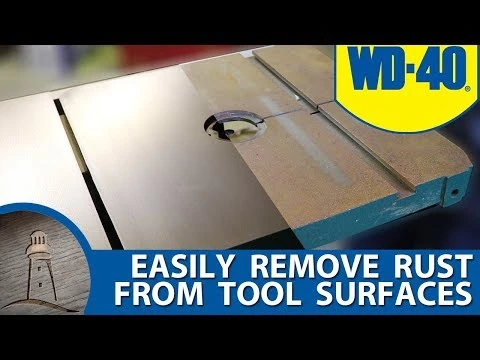
Use
 ▶ Watch on YouTube
(source), WD-40 and "rust erasers" (pads impregnated with aluminum oxide) to remove rust blooms.
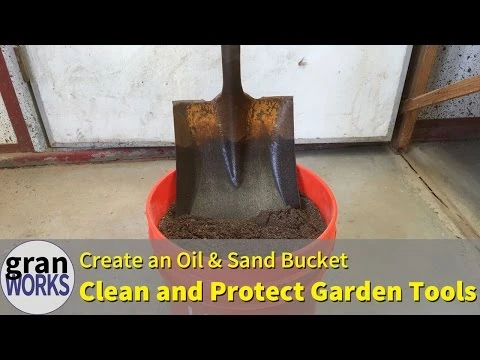
For garden tools, pour used cooking oil in a 5 gallon bucket. Add play sand.
 ▶ Watch on YouTube
.
Use corrosion resistant materials like glass, cement, aluminum, fiberglass or 316 stainless steel whenever possible.
Use rubber / nitrile washers on screws and bolts to prevent water intrusion.
How to use dessicants (silica gel, clay pellets)
Put packets of silica gel (silica dioxide) in tool boxes.
 ▶ Watch on YouTube
You can make your own dessicant bags with coffee filters or nylon drawstring bags.
 ▶ Watch on YouTube
by drying them in the oven/dehydrator.
To be able to tell how much humidity is present in a toolbox / container add an inexpensive hygrometer. If the moisture level rises above 25% relative humidity, you should add fresh silica gel or re-charge the silica gel. Ideally, the relative humidity should be <10%.
To re-charge silica gel,
 ▶ Watch on YouTube
. As the water evaporates, the weight of the silica gel will decrease. You can tell that the silica gel is fully recharged when it is no longer losing weight
You can also dry dessicant in the microwave. In a microwave safe bowl, microwave the dessicant for 20 minutes (5 minutes at a time) at the lowest setting (defrost mode).
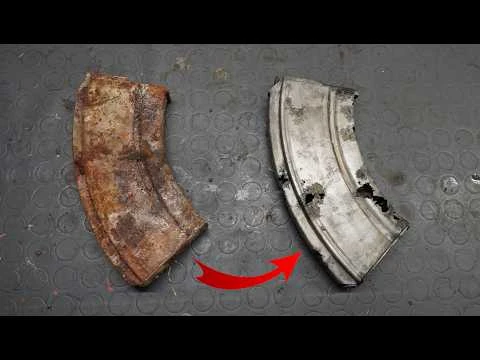
How to make your own DIY Evap-O-Rust
This is a non-toxic yet effective
▶ Watch on YouTube
(courtesy of "Beyond Ballistics") for removing rust from steel. It’s inexpensive and is not especially hazardous. (Though be sure to wear eye protection when handling the sodium hydroxide.)
Per liter of tap water, add the following:
100 grams citric acid
A few squirts of liquid dish soap (Dawn)
...and any one of the following:
40 grams sodium carbonate
63 Grams sodium bicarbonate
30 grams sodium hydroxide
Soak the part for 30+ minutes, then rinse thoroughly with distilled water.
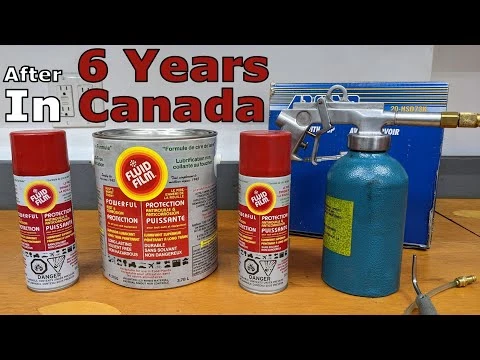
How to protect vehicles / engines from salt spray with "Fluid Film"
In this
▶ Watch on YouTube
, he shows how to apply Fluid Film to vehicles subject to salt water corrosion.
You can buy the product here:
How to "blue" your tools for increased rust protection.
Most of the informatio in this tutorial comes from "
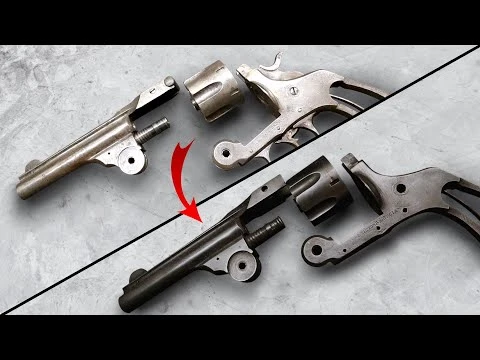
▶ Watch on YouTube
".
"Bluing" is any process that makes non-stainless steel form a layer of iron oxide on its surface.
Depending on the process, this can result in array of different colors. For example, a thick coat of ferric oxide will result in a brown color.
There are three main types of bluing: heat bluing, caustic bluing, and rust bluing. This tutorial is about rust bluing.
Rust bluing doesn't require especially harsh / toxic chemicals, nor high temperatures. This means it won't damage heat treated parts.
Here's the recipe for the bluing solution:
7.5 g ZnCl2 (zinc chloride)
5 g NH4Cl (ammonium chloride)
2 ml of 35% HCL (hydochloric acid)
100 ml distilled water
Here's the procedure for using the bluing solution:
Don nitrile gloves.
Remove existing rust with DIY Evap-O-Rust (see above).
Clean the part with acetone.
Wipe down the part with bluing solution.
Swab the part with hydrogen peroxide. The higher the concentration, the faster the reaction.
After a few minutes of swabbing the surface will have a copper-like patina.
Rinse the part with distilled water.
Dunk the part in boiling water for 15 minutes.
Remove the part, and scrub the part with fine steel wool or a carding wheel.
Most of the black oxide will wipe off, except for a very thin, tightly adherent layer on top of the surface (which is the newly formed bluing).
Repeat the process as necessary to achieve the level of bluing you want. To achieve a deep black color, 5-8 passes will be required.
Coat the surface with a drying oil, such as boiled linseed oil, CRC Power Lube, or LPS-2 A drying oil is an oil that hardens to a tough, solid film after a period of exposure to air, at room temperature.
Want to stay in touch? You can reach me in a variety of ways from my Contact page.