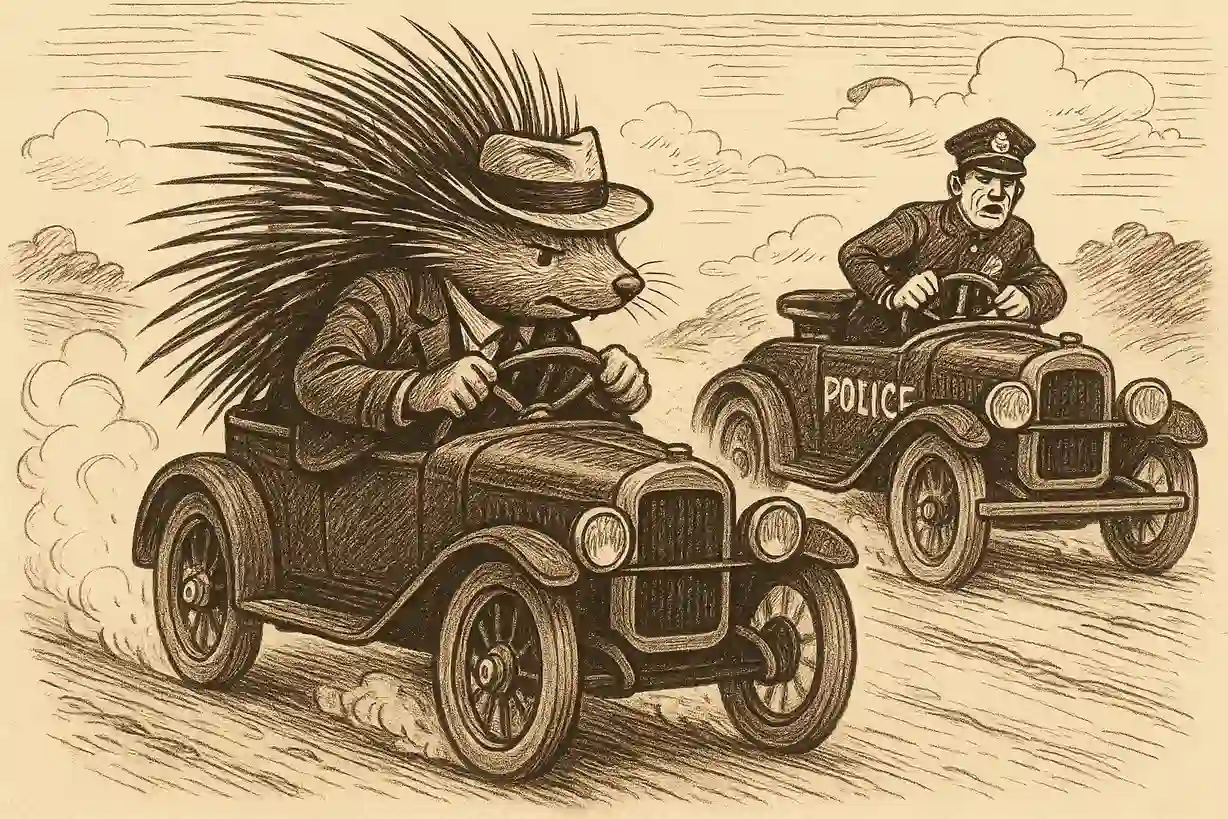
According to a recently passed law, New Hampshire state officials will no longer respect driver's licenses issued to out-of-state illegal immigrants.
(New Hampshire has never issued licenses to illegal immigrants, but used to respect licenses from other states that did.)
Robert Cameron Weir attempts to provide a libertarian justification for this law as follows:
“[I]magine a 100% private law/private property society, one where all the roads were private and driven on by permission of the owner.
If I then had my choice of driving on a road where the owner enforced some minimal standards of driving competence, screened drivers for impairment, ensured that they carried identification so if there was an accident I knew who to sue for damages, etc., versus a private road, lacking these protections, but the same in all other ways, I'd always pick the road that offered such minimal features.
You might pick differently, of course, but I think my view would be in the majority.
But would I care about the citizenship of the other drivers? No. Why should I? That does not appear to be a rational concern.However, if it became well known that there were some parties issuing licenses to unqualified drivers, drivers who could not read the road signs, drivers who might not even have passed a written or road test, that they were handing licenses out like Halloween candy based on lack of citizenship, then I would expect the private owner of the road to take notice of this, and act to protect their own reputation, the reputation of the road, and their customers.
Until such a day comes where we do have private roads, the best I can hope for is public roads where elected officials adopt the providential mindset of an owner.”
Until we live in a fully libertarian world, libertarians will have to live with authoritarian institutions such as government-owned roads.
Given that the ideal libertarian system is impossible to achieve for the foreseeable future, what kinds of laws should libertarians advocate for in the meantime?
It seems reasonable to me that we should advocate for laws that approximate as closely as possible what would exist in a fully anarchist society.
But is a government monopoly that bars millions of people from using the roads based solely on where they were born a very good approximation of the likely policies of the roads of Ancapistan?
IMO, US with a private law system would likely have many different private road companies, airlines, railroads, and shipping services.
It's likely that market share would follow a power law distribution, with two or three big players taking 70-80% of the market followed by a long tail of smaller providers.
Would any of the major road service providers have a policy that discriminated against drivers based solely on where the driver was born?
Seems unlikely to me.
Why would they forgo business from competent drivers with money?
Instead, it seems more likely to me that they'd use tests of skill and knowledge to verify driver competency, regardless of birthplace.
What if their driver certification process in a particular state (California, let's say) became corrupted? Would they deny use of the roads to everyone from CA?
That seems unlikely, as CA has millions of drivers, most of whom aren't cheaters. Denying all of them service would result in large amounts of lost income and send them to a competitor.
Rather than suffer massive losses from denying service to all Californians, it seems to me that Ancapistan Road Corp would instead figure out a way to root out the incompetent cheaters, while leaving the rest of their California customers alone.
So, is a government monopoly that bars road service to millions of people based solely on their birthplace a very good approximation of what would happen in a private law system?
Doesn't seem so to me.
A much better approximation seems to me to be a system that grants access to anyone who (a) follows safe driving practices and (b) pays their share of the costs.
However, driving isn’t the only thing that driver’s licenses are used for. They are also often used to identify those that are allowed to claim government welfare benefits, such as Medicaid, food stamps, and section 8 housing.
A driver’s license is also used to identify who is allowed to vote in elections, consume drugs (alcohol, weed, and tobacco), have sex, buy a firearm, purchase medical services without parental authorization and so on.
So I think the most libertarian approximation to Ancapistan would be to issue a card with multiple certifications on it:
* driver’s certifications - issued based on a test of driver competency
* citizenship certification - issued based on citizenship
* age certification - issued based on age
Access to each certification could be limited to a “need to know” basis. For example, a bar hostess only needs to know if you are over 21, but not your actual age. Nor does the hostess need to know your address, driver’s license number, etc.
Likewise, a road cop doesn’t need to know your citizenship status, only whether you have passed the driver’s certification test and are above legal driving age.
Something like the StampID system created by Andrew Lyon could be used to implement these certifications. StampID is a distributed, cryptographic identity system used to represent a personal or group identity in electronic systems.
Whatever the practical system, we shouldn’t let some libertarians—who hate or fear immigrants, gays, Jews, blacks, Muslims—deprive these subpopulations of their liberty under the mantle of libertarianism.
Want to stay in touch? You can reach me in a variety of ways from my Contact page.