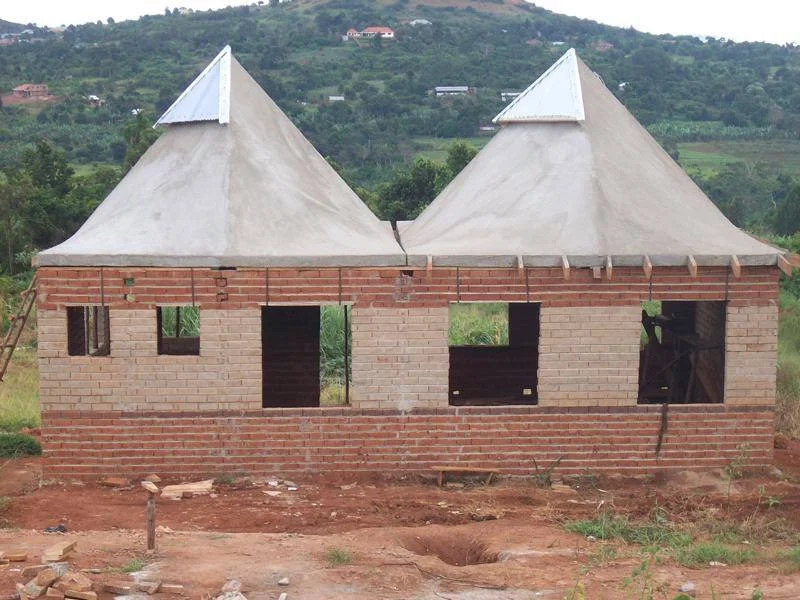
Back in the 1961, George Nez was charged with helping to relocate over 100,000 people in preparation for the Volta River hydro-electric project in Ghana. He and his staff had 18 months to construct 14,000 homes. Instead of trying to build the entire building, he and his staff decided upon a "roof-first" approach.
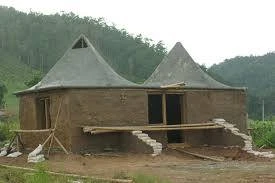
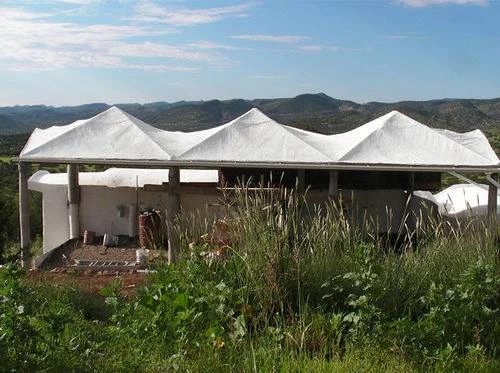
"“We built those towns by putting roofs up first on concrete posts,” Nez remembers. “Some 14,000 roofs were put up rapidly by small crews, then you had these buildings which were merely a whole city of roofs.” The resettlers could move in there directly on schedule and build their own wall."
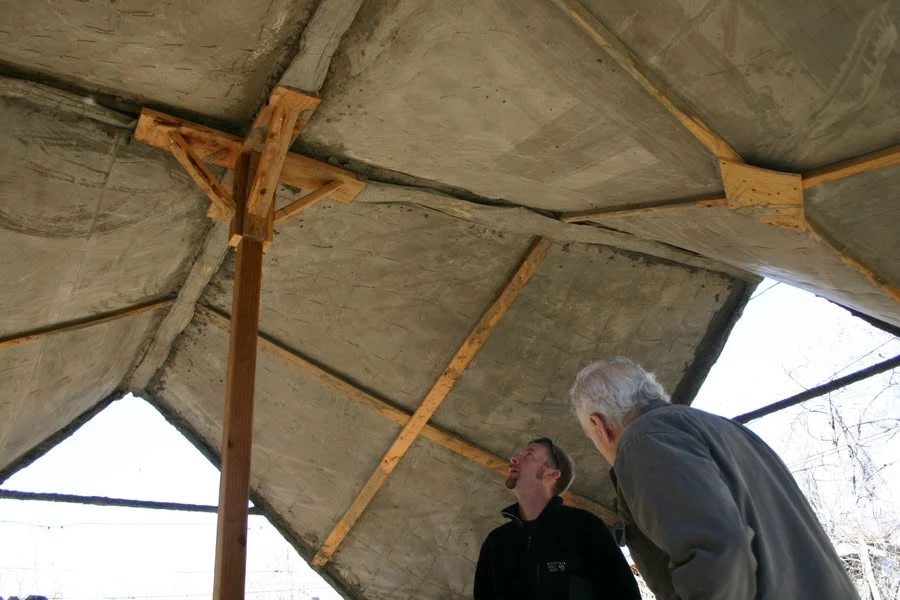
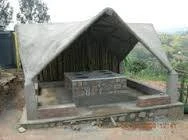
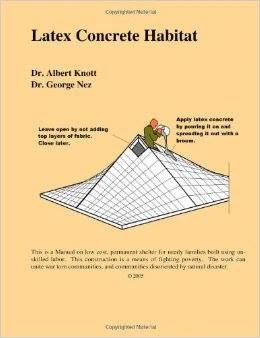
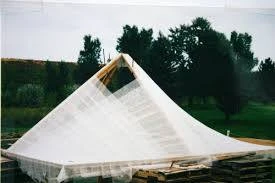
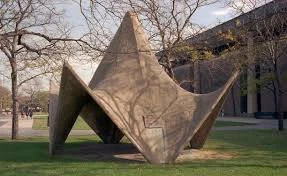
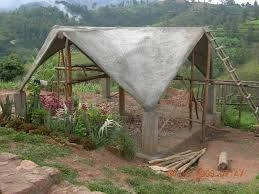
Based on his experience, he went on to develop a permanent roofing system, latex/concrete laminated hypar roofs, with the following characteristics:
* lightweight
* low-cost
* low-skill
* fast construction time
* low-material
* build-able with hand tools
* build-able with locally available materials
The process consists of the following three steps:
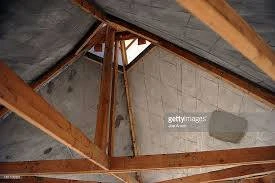
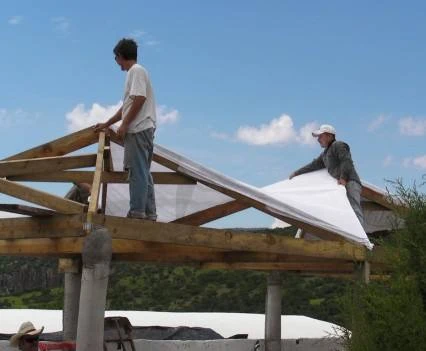
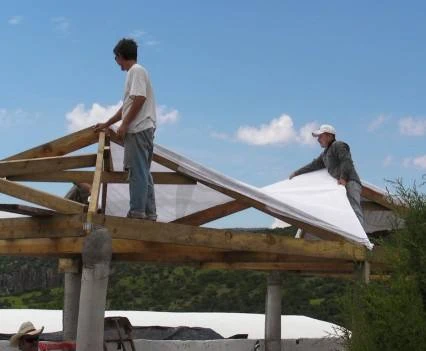
1. Construct a hypar frame out of wood or bamboo.
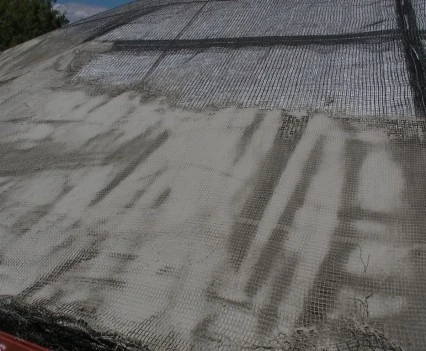
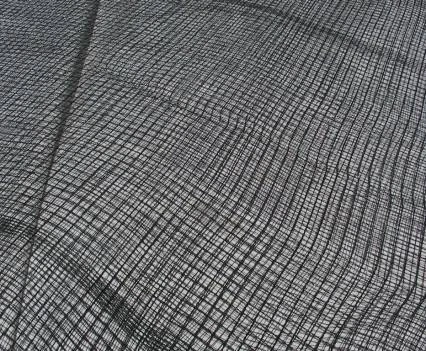
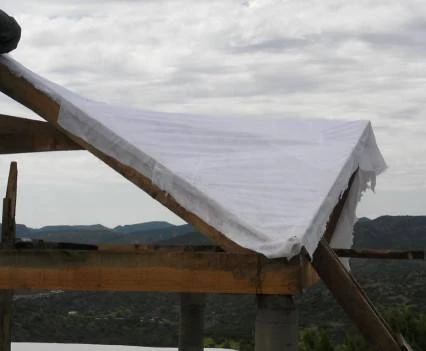
2. Stretch fiberglass mesh (mosquito netting/window screen) over the frame.
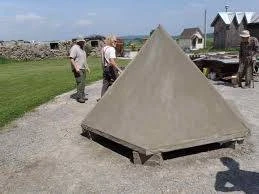
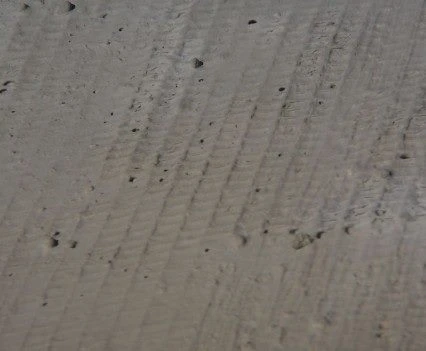
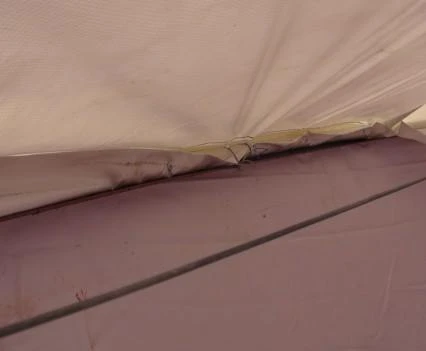
3. Coat the mesh with a slurry of Portland cement, fine sand, and acrylic paint.
When dry, this forms a rigid shell that can be lifted onto support beams. Walls and other interior structures can then be built by the family under the protection of the roof.
There's an excellent instructable on making such roofs here:
http://www.instructables.com/id/Latex-Concrete-Roof/
They claim that the materials cost for their roof is about $1/ft2.
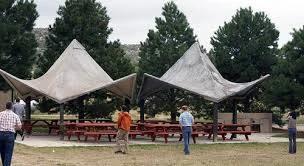
A demo project in Denver has been able to withstand 3 foot snow loads and 80+ mph winds for the last 14 years:
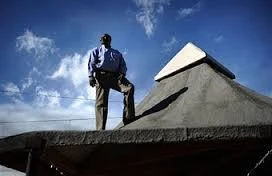
"Engineers Without Borders [built a demo project] in Boulder, [CO] in 1996. After 14 years this structure has been subjected to a full range of climate stresses including 3 foot snow loads, extreme heat and cold, 80+ mph winds and intense high altitude UV exposure. Visual inspection by the TSC Global and Colorado School of Mines engineering team revealed almost no structural deterioration at all. In fact the hypar surface was in perfect condition, with hairline fractures having developed only along the flat areas on the ridge beams.
More importantly, the 1 cm. thick TSC roof surface displayed flexibility and resilience when walked on, and our technician was able to bounce the roof membrane which showed the flexing response for the entire structure."
"“We built those towns by putting roofs up first on concrete posts,” Nez remembers. “Some 14,000 roofs were put up rapidly by small crews, then you had these buildings which were merely a whole city of roofs.” The resettlers could move in there directly on schedule and build their own wall."
Based on his experience, he went on to develop a permanent roofing system, latex/concrete laminated hypar roofs, with the following characteristics:
* lightweight
* low-cost
* low-skill
* fast construction time
* low-material
* build-able with hand tools
* build-able with locally available materials
The process consists of the following three steps:
1. Construct a hypar frame out of wood or bamboo.
2. Stretch fiberglass mesh (mosquito netting/window screen) over the frame.
3. Coat the mesh with a slurry of Portland cement, fine sand, and acrylic paint.
When dry, this forms a rigid shell that can be lifted onto support beams. Walls and other interior structures can then be built by the family under the protection of the roof.
There's an excellent instructable on making such roofs here:
http://www.instructables.com/id/Latex-Concrete-Roof/
They claim that the materials cost for their roof is about $1/ft2.
A demo project in Denver has been able to withstand 3 foot snow loads and 80+ mph winds for the last 14 years:
"Engineers Without Borders [built a demo project] in Boulder, [CO] in 1996. After 14 years this structure has been subjected to a full range of climate stresses including 3 foot snow loads, extreme heat and cold, 80+ mph winds and intense high altitude UV exposure. Visual inspection by the TSC Global and Colorado School of Mines engineering team revealed almost no structural deterioration at all. In fact the hypar surface was in perfect condition, with hairline fractures having developed only along the flat areas on the ridge beams.
More importantly, the 1 cm. thick TSC roof surface displayed flexibility and resilience when walked on, and our technician was able to bounce the roof membrane which showed the flexing response for the entire structure."