[2015]
"Biotechnology startup bioMASON grows bricks -- with the help of a few trillion microorganisms.
Ginger Dosier, the North Carolina-based company's 37-year-old founder and CEO, hit on the bacterial production process while studying the construction of coral reefs. "I realised that, as with teeth, the building block is calcium carbonate," she explains. "This crystallises due to changes in the surrounding pH caused by microorganisms in the coral."
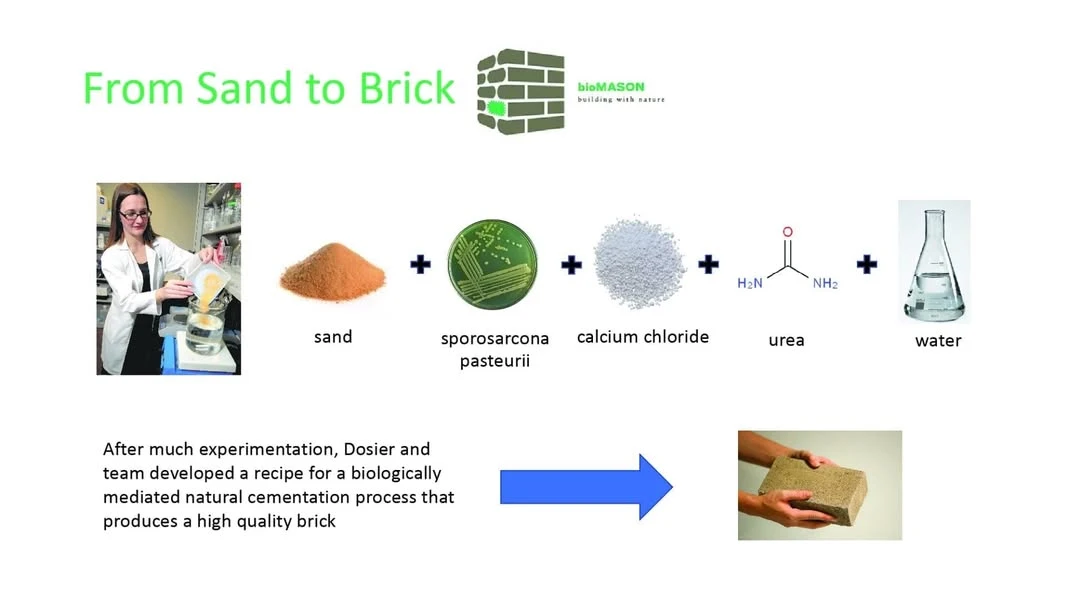
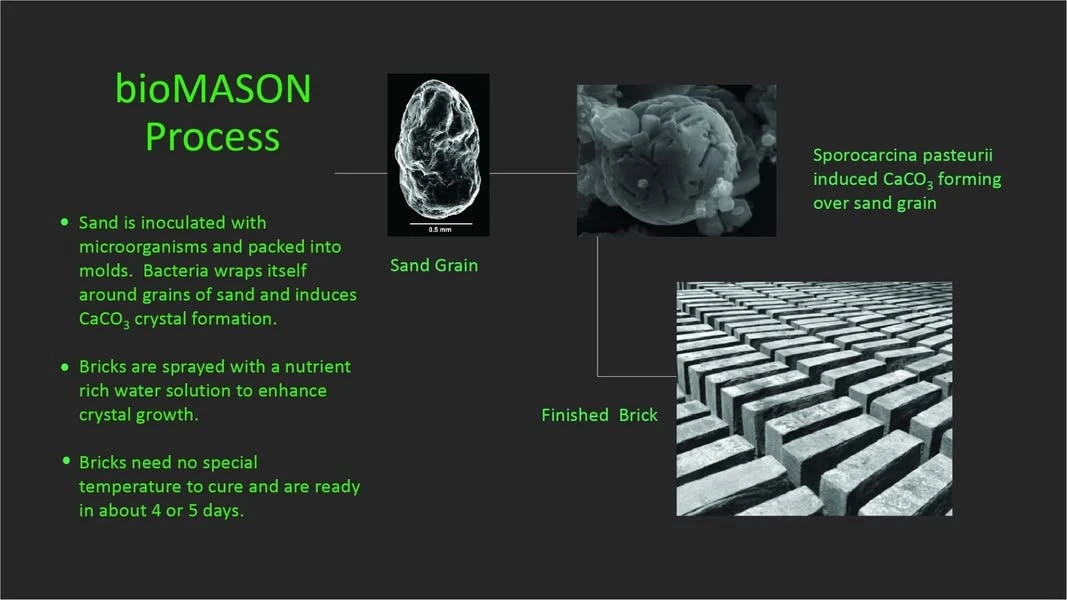
The bioMASON process begins with sand. It is placed into moulds and inoculated with Sporosarcina pasteurii bacteria, which are then fed with calcium ions suspended in water. "The ions are attracted to the bacterial cell walls, creating a calcium carbonate shell which causes particles to stick to each other," Dosier says.
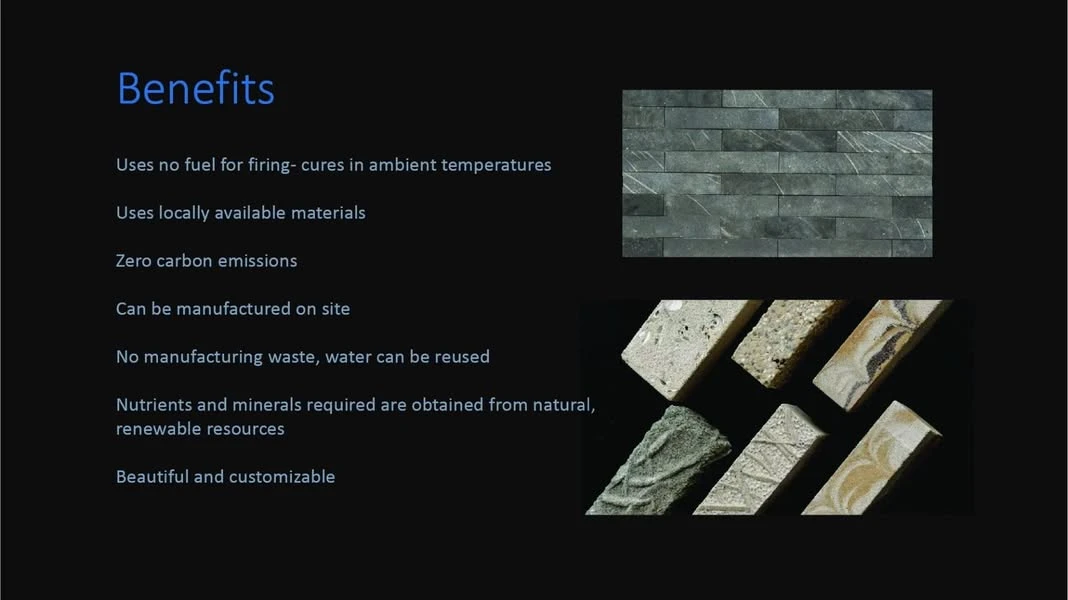
A single bacterial brick takes two to five days to grow, compared with three to five days to make a kiln-fired version. "We can make bricks that glow in the dark, bricks that absorb pollution, bricks that change colour when wet," Dosier says."
"Biotechnology startup bioMASON grows bricks -- with the help of a few trillion microorganisms.
Ginger Dosier, the North Carolina-based company's 37-year-old founder and CEO, hit on the bacterial production process while studying the construction of coral reefs. "I realised that, as with teeth, the building block is calcium carbonate," she explains. "This crystallises due to changes in the surrounding pH caused by microorganisms in the coral."
The bioMASON process begins with sand. It is placed into moulds and inoculated with Sporosarcina pasteurii bacteria, which are then fed with calcium ions suspended in water. "The ions are attracted to the bacterial cell walls, creating a calcium carbonate shell which causes particles to stick to each other," Dosier says.
A single bacterial brick takes two to five days to grow, compared with three to five days to make a kiln-fired version. "We can make bricks that glow in the dark, bricks that absorb pollution, bricks that change colour when wet," Dosier says."