▶ Watch on YouTube
Democrats claim to care very much about voting and the "right to vote". Most get very indignant at the idea that someone who wanted to vote might have been hindered from voting. To deny someone the vote is to deny them the chance to influence the laws that govern them--a great wrong.
But why does voting have such a place of prominence in Democratic ethics?
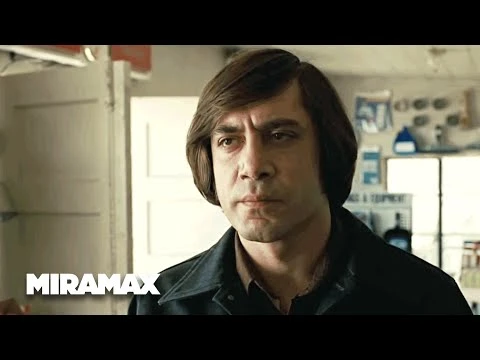
Consider the "quarter scene" from New Country For Old Men.
*** Spoilers ***
In the movie, Javier Bardem plays Anton Chigurgh a psychopathic hitman on the hunt for Llewelyn Moss (Josh Brolin) a working class stiff who stole a suitcase full of cash from the drug cartels. In this scene, Chigurgh asks a gas station attendant to call heads/tails on a coin toss:
Now, the gas station attendant has far better odds of influencing the outcome than a typical voter: assuming a fair coin, he has a 50% chance of winning. And he has enormous personal stakes--choose well and he lives; choose poorly and he dies.
But is the fact that he a) has a vote b) his vote will have a decisive influence on the outcome c) he has a huge personal stake in the outcome.
But is Chigurgh
But why does voting have such a place of prominence in Democratic ethics?
Consider the "quarter scene" from New Country For Old Men.
*** Spoilers ***
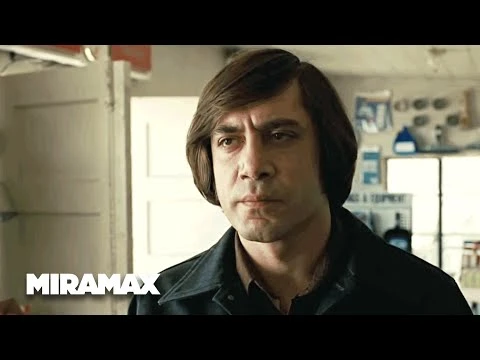
In the movie, Javier Bardem plays Anton Chigurgh a psychopathic hitman on the hunt for Llewelyn Moss (Josh Brolin) a working class stiff who stole a suitcase full of cash from the drug cartels. In this scene, Chigurgh asks a gas station attendant to call heads/tails on a coin toss:
▶ Watch on YouTube
Now, the gas station attendant has far better odds of influencing the outcome than a typical voter: assuming a fair coin, he has a 50% chance of winning. And he has enormous personal stakes--choose well and he lives; choose poorly and he dies.
But is the fact that he a) has a vote b) his vote will have a decisive influence on the outcome c) he has a huge personal stake in the outcome.
But is Chigurgh