"With a mechanical advantage of 14 to one, one man in a treadwheel operating a Pentaspastos and exerting a force of 50 kilograms could thus lift a load of 3500 kilogram or 3.5 tonnes. That’s about 70 times more than he could lift with a simple pulley.
Some cranes (especially the harbour cranes from the middle ages and onwards) were equipped with two treadwheels attached to the same axle, bringing the total lifting power of a human powered crane to some 7,000 kilograms or 7 tonnes.
Because many treadwheels were also wide enough for two people walking side by side, a crane with two treadwheels could be powered by 4 people, which brings the maximum lifting power at 14 tonnes - comparable to that of a common modern tower crane. Even taking into account a loss of 20 percent due to friction, this is still 11.2 tonnes.
...
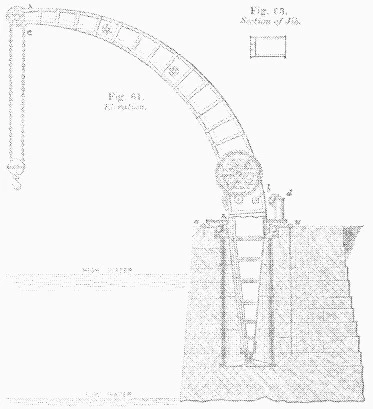
The first hand-driven Fairbairn harbour cranes were intended to lift weights of up to 12 tons to a height of 30 feet (9 metres) above the ground, and to sweep this load round over a circle 65 feet (20 metres) in diameter (illustration on the left).
Next, a 60 ton crane was built for the new docks at Keyham, which could lift loads five times heavier up to heights of 60 feet (18 metres) and over a circle 104 feet (32 metres) in diameter."
https://solar.lowtechmagazine.com/2010/03/history-of-human-powered-cranes.html
Some cranes (especially the harbour cranes from the middle ages and onwards) were equipped with two treadwheels attached to the same axle, bringing the total lifting power of a human powered crane to some 7,000 kilograms or 7 tonnes.
Because many treadwheels were also wide enough for two people walking side by side, a crane with two treadwheels could be powered by 4 people, which brings the maximum lifting power at 14 tonnes - comparable to that of a common modern tower crane. Even taking into account a loss of 20 percent due to friction, this is still 11.2 tonnes.
...
The first hand-driven Fairbairn harbour cranes were intended to lift weights of up to 12 tons to a height of 30 feet (9 metres) above the ground, and to sweep this load round over a circle 65 feet (20 metres) in diameter (illustration on the left).
Next, a 60 ton crane was built for the new docks at Keyham, which could lift loads five times heavier up to heights of 60 feet (18 metres) and over a circle 104 feet (32 metres) in diameter."
https://solar.lowtechmagazine.com/2010/03/history-of-human-powered-cranes.html