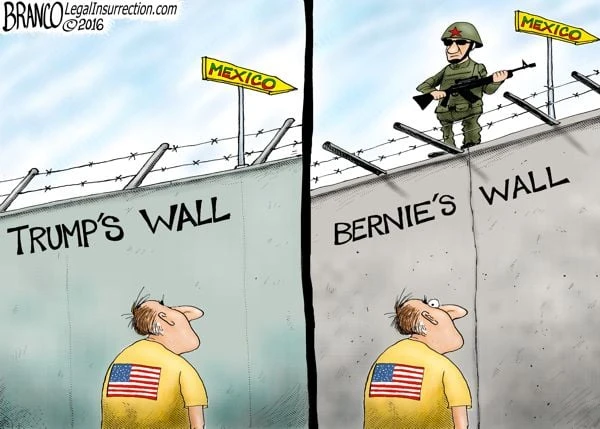
I also call advocates of immigration suppression laws "border socialists"; here's why:
"one of the weird iterations of this phenomenon is (well meaning) young fellows defending immigration tolerance by saying that the wall was a "socialist" project - as though that was the most damning thing they could say about xenophobia." -- Bill Kelsey
My response:
Using Shikha's definition of socialism:
"Full-blown socialism of course means abolishing private property and putting industry under direct government control."
In the absences of immigration suppression laws, people would be able to freely invite anyone from anywhere in the world to live and work with them on their own property or the property of others willing to rent or sell to immigrants. The composition of the US would then be determined by the aggregate decisions of hundreds of millions of people, each using their local knowledge to satisfy their own self interest.
By contrast, nativists think that they know better than everyone else what the "right" ethnic and racial composition of the US should be. Therefore, they want to forcibly substitute the decisions of a small cadre of bureaucrats for the decisions of hundreds of millions of Americans.
Yes, the nativists might not support government command in control of the rest of the economy. Yes, the nativists demands might be driven by xenophobia, rather than by the socialist's nominal desire for equality.
But in the course of trying to suppress immigration, they violate the property rights of native and immigrant alike. And they largely destroy the marketplace for immigrant labor/service, substituting instead a command and control regime by politicians and bureaucrats.
How does that _not_ fit the definition of a socialist policy, as Shikha defines it above?
"one of the weird iterations of this phenomenon is (well meaning) young fellows defending immigration tolerance by saying that the wall was a "socialist" project - as though that was the most damning thing they could say about xenophobia." -- Bill Kelsey
My response:
Using Shikha's definition of socialism:
"Full-blown socialism of course means abolishing private property and putting industry under direct government control."
In the absences of immigration suppression laws, people would be able to freely invite anyone from anywhere in the world to live and work with them on their own property or the property of others willing to rent or sell to immigrants. The composition of the US would then be determined by the aggregate decisions of hundreds of millions of people, each using their local knowledge to satisfy their own self interest.
By contrast, nativists think that they know better than everyone else what the "right" ethnic and racial composition of the US should be. Therefore, they want to forcibly substitute the decisions of a small cadre of bureaucrats for the decisions of hundreds of millions of Americans.
Yes, the nativists might not support government command in control of the rest of the economy. Yes, the nativists demands might be driven by xenophobia, rather than by the socialist's nominal desire for equality.
But in the course of trying to suppress immigration, they violate the property rights of native and immigrant alike. And they largely destroy the marketplace for immigrant labor/service, substituting instead a command and control regime by politicians and bureaucrats.
How does that _not_ fit the definition of a socialist policy, as Shikha defines it above?