Julie Frederickson is trying some self-experimentation with nicotine to treat Covid symptoms:
https://jfredrickson.com/day-1283-and-nachrs/
"I’m trying a crazy experiment.
Inspired by Gwern, my new osteopath & some anecdotes I am going to use a Nicotine patch for 3-5 days at 7mg as I’m on week 7 of covid symptoms not fully clearing."
She's getting some criticism from folks who warn that it will lead to nicotine addiction:
"I keep adding caveats as it’s so triggering to folks as addicts or those with tendencies to it should minimum viable dose of zero.
Unclear what population percentage is addiction prone. Guessing it’s most.
I’d be uncomfortable except I’ve got no generic addiction lineage. I’m a teetotaler otherwise. I don’t drink alcohol, I smoked one cigarette 20 years ago before this, & don’t use recreational drugs (I do use cannabinoids for my spinal condition)"
https://x.com/AlmostMedia/status/1810304004636995791
#archerdrugs
Here's my response:
Much depends on how you define "addiction prone".
If you define "addiction prone" as "someone who has tried a drug at least once in their life, and then has gone on to use it at least once per month", the answer appears to be about 5%:
https://suburra.com/blog/2011/10/11/low-addiction-rates
I tried meth for about 3 months one summer to see if it would help curb my appetite. (One of meth's legal uses is as a "drug of last resort" for obesity treatment.) At the dosages I was using it, it did not curb my appetite very much. But I could see how someone could get addicted to it. While I was on it, it made me feel great, and I was highly productive. However, I was turned off by the "crash" and sleep disturbances it caused. To me, meth felt like borrowing against my future productivity and happiness, which I would later have to pay back with interest. So it didn't provide a net productivity gain. But I could see it being useful for occasional use (it was used by pilots in WWII who had to go on long bombing runs). I haven't used it in years, and I feel little desire to use it now.
I've also tried nicotine in the form of "snus" (tobacco pouches), for appetite suppression and cognitive benefits. At present, I do feel a strong draw to the drug, and would say that I'm "mildly addicted", ie. I experience intrusive desire for the drug. But that desire took several months of daily use to develop. Delivery mechanism appears to have an impact on addiction. Delivery mechanisms that provide a quick, intense hit are more addictive than mechanisms that deliver the drug slowly over time. For example, in the case of opiates, patches < lollipops < pills < suppository < smoking < injection. As patches are the least addictive delivery mechanisms for nicotine, I doubt you'll get addicted if you follow the schedule you lay out.
Unfortunately, nicotine doesn't appear to curb my appetite at all. It does appear to have cognitive benefits, ie my ability to focus on productive work appears to be greater. But the effects are subtle enough that I'm not entirely sure that it's not placebo.
I think much depends on:
a) your baseline psychology
b) how well the rest of your life is going
c) the environment
For example, a very close friend of mine died young from a fentanyl overdose. In her case, she was prone to severe anxiety from a young age. (For example, she refused to go to school for months in the fourth grade due to anxiety.) She self-medicated her anxiety with alcohol and opiates. IMO, she would always have trouble with addictive behavior, because the inebriated state was one of the few times she was free of anxiety.
But for many people, environment has a determinative influence.
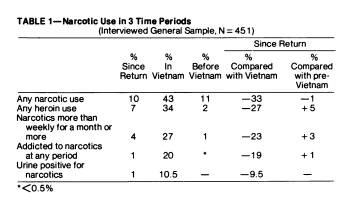
For example, while they were in Vietnam, about 27% of the soldiers met for the criteria for addiction to heroin. But when they returned to the US, addiction rates fell back to almost what they were before the war. (See attached table.)
https://ajph.aphapublications.org/doi/pdf/10.2105/AJPH.64.12_Suppl.38
I've experienced a similar phenomenom. When I'm around heavy drinkers, I drink frequently, and sometimes binge drink. But when I'm not around drinkers, I don't drink.
In rat models, rats that are housed in colonies optimized for rat "happiness" consume very little drugs compared to rats kept in little plastic boxes:
https://en.wikipedia.org/wiki/Rat_Park
If you do become addicted, there is a class of drugs that appear to reverse tolerance / extinguish addiction. For example, naltrexone seems to be effective for extinguishing addictive behavior in many alcohol users. Katie Herzog used naltrexone / "Sinclair method" to extinguish her addiction to alcohol, which she details in the Reflector podcast "The Sea Change":
https://x.com/nickgillespie/status/1801278064548036919
Ultra-low dose naltrexone appears to be helpful for reversing tolerance /addiction to opiates:
https://www.reddit.com/r/Methadone/comments/17oya1q/uldn_ultra_low_dose_naltrexone_will_potentiate/
The psychedelics, LSD, Ibogaine, DMT, and 5-MEO-DMT also appear to have addiction extinguishing properties:
https://www.nytimes.com/2024/03/05/health/ibogaine-psychedelic-opioid-addiction.html
Bill Wilson, co-founder of Alcoholics Anonymous, advocated for the use of LSD as a treatment for alcohol addiction:
https://www.inverse.com/mind-body/alcoholics-anonymous-lsd-bill-wilson
https://jfredrickson.com/day-1283-and-nachrs/
"I’m trying a crazy experiment.
Inspired by Gwern, my new osteopath & some anecdotes I am going to use a Nicotine patch for 3-5 days at 7mg as I’m on week 7 of covid symptoms not fully clearing."
She's getting some criticism from folks who warn that it will lead to nicotine addiction:
"I keep adding caveats as it’s so triggering to folks as addicts or those with tendencies to it should minimum viable dose of zero.
Unclear what population percentage is addiction prone. Guessing it’s most.
I’d be uncomfortable except I’ve got no generic addiction lineage. I’m a teetotaler otherwise. I don’t drink alcohol, I smoked one cigarette 20 years ago before this, & don’t use recreational drugs (I do use cannabinoids for my spinal condition)"
https://x.com/AlmostMedia/status/1810304004636995791
#archerdrugs
Here's my response:
Much depends on how you define "addiction prone".
If you define "addiction prone" as "someone who has tried a drug at least once in their life, and then has gone on to use it at least once per month", the answer appears to be about 5%:
https://suburra.com/blog/2011/10/11/low-addiction-rates
I tried meth for about 3 months one summer to see if it would help curb my appetite. (One of meth's legal uses is as a "drug of last resort" for obesity treatment.) At the dosages I was using it, it did not curb my appetite very much. But I could see how someone could get addicted to it. While I was on it, it made me feel great, and I was highly productive. However, I was turned off by the "crash" and sleep disturbances it caused. To me, meth felt like borrowing against my future productivity and happiness, which I would later have to pay back with interest. So it didn't provide a net productivity gain. But I could see it being useful for occasional use (it was used by pilots in WWII who had to go on long bombing runs). I haven't used it in years, and I feel little desire to use it now.
I've also tried nicotine in the form of "snus" (tobacco pouches), for appetite suppression and cognitive benefits. At present, I do feel a strong draw to the drug, and would say that I'm "mildly addicted", ie. I experience intrusive desire for the drug. But that desire took several months of daily use to develop. Delivery mechanism appears to have an impact on addiction. Delivery mechanisms that provide a quick, intense hit are more addictive than mechanisms that deliver the drug slowly over time. For example, in the case of opiates, patches < lollipops < pills < suppository < smoking < injection. As patches are the least addictive delivery mechanisms for nicotine, I doubt you'll get addicted if you follow the schedule you lay out.
Unfortunately, nicotine doesn't appear to curb my appetite at all. It does appear to have cognitive benefits, ie my ability to focus on productive work appears to be greater. But the effects are subtle enough that I'm not entirely sure that it's not placebo.
I think much depends on:
a) your baseline psychology
b) how well the rest of your life is going
c) the environment
For example, a very close friend of mine died young from a fentanyl overdose. In her case, she was prone to severe anxiety from a young age. (For example, she refused to go to school for months in the fourth grade due to anxiety.) She self-medicated her anxiety with alcohol and opiates. IMO, she would always have trouble with addictive behavior, because the inebriated state was one of the few times she was free of anxiety.
But for many people, environment has a determinative influence.
For example, while they were in Vietnam, about 27% of the soldiers met for the criteria for addiction to heroin. But when they returned to the US, addiction rates fell back to almost what they were before the war. (See attached table.)
https://ajph.aphapublications.org/doi/pdf/10.2105/AJPH.64.12_Suppl.38
I've experienced a similar phenomenom. When I'm around heavy drinkers, I drink frequently, and sometimes binge drink. But when I'm not around drinkers, I don't drink.
In rat models, rats that are housed in colonies optimized for rat "happiness" consume very little drugs compared to rats kept in little plastic boxes:
https://en.wikipedia.org/wiki/Rat_Park
If you do become addicted, there is a class of drugs that appear to reverse tolerance / extinguish addiction. For example, naltrexone seems to be effective for extinguishing addictive behavior in many alcohol users. Katie Herzog used naltrexone / "Sinclair method" to extinguish her addiction to alcohol, which she details in the Reflector podcast "The Sea Change":
https://x.com/nickgillespie/status/1801278064548036919
Ultra-low dose naltrexone appears to be helpful for reversing tolerance /addiction to opiates:
https://www.reddit.com/r/Methadone/comments/17oya1q/uldn_ultra_low_dose_naltrexone_will_potentiate/
The psychedelics, LSD, Ibogaine, DMT, and 5-MEO-DMT also appear to have addiction extinguishing properties:
https://www.nytimes.com/2024/03/05/health/ibogaine-psychedelic-opioid-addiction.html
Bill Wilson, co-founder of Alcoholics Anonymous, advocated for the use of LSD as a treatment for alcohol addiction:
https://www.inverse.com/mind-body/alcoholics-anonymous-lsd-bill-wilson